
The best time to find a missing share certificate or an outdated security registration is before a buyer starts due diligence. Preparing your Alberta business for sale early gives you time to identify gaps, resolve what you can and explain matters that cannot be fixed before closing.
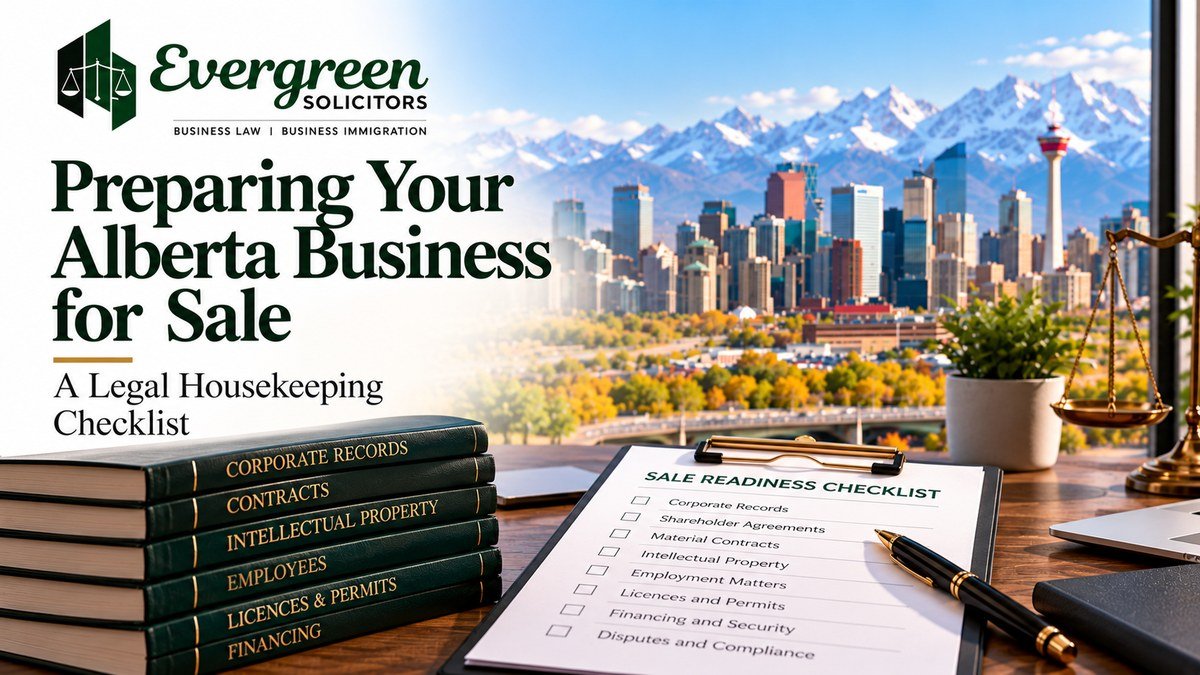
A sale-readiness review is not about making a business appear problem-free. It is about knowing what is being sold, who owns it and what a buyer will need to investigate.
1. Check the corporation’s records
Review the minute book and current corporate registry information. Confirm that the articles and amendments, director information, securities register, shareholder resolutions and material approvals reflect what actually happened. Identify missing documents and filings that need attention.
Do not assume an accountant’s ownership schedule replaces the corporation’s legal records. If a record needs correction or reconstruction, obtain advice on the appropriate process rather than simply creating a document as though it had been signed years ago.
2. Confirm who owns the shares
A share buyer needs to know which shares are outstanding and who can sell them. Check issuances, transfers, share classes and any differences between the securities register, certificates and the parties’ understanding.
Ownership questions can become more difficult to resolve once negotiations are underway, especially if former founders or investors must be contacted.
3. Review shareholder agreements before negotiating
A shareholders’ agreement may affect who can sell, whether shares must first be offered to another owner and what approvals are needed. It may also contain drag-along or tag-along provisions relevant to a proposed sale.
Read the actual agreement before promising a buyer that all shares can be delivered at closing. Any required notices, consents and timelines should be built into the sale plan.
4. Organize the contracts that make the business valuable
Prepare a list of material customer, supplier, distributor, software, financing and other agreements. Note their term, renewal dates, termination rights and unusual commitments.
Assignment and change-of-control provisions deserve particular attention. An asset sale may require contracts to be transferred; a share sale can still trigger rights tied to a change in ownership. The terms of each agreement determine what the parties need to do.
5. Verify intellectual property and digital assets
Identify the trademarks, domains, website content, software, designs and other intellectual property important to the business. Check whether the selling corporation owns them or has sufficient rights to use and transfer them.
Work created by a founder, employee, agency or independent contractor can require a closer look at the underlying agreements. If ownership or licence documents are missing, address the gap before representing to a buyer that the corporation owns the asset.
6. Read the lease and identify premises issues
If the business leases its premises, check the remaining term, renewal rights, defaults, guarantees and provisions dealing with assignment or a change of control. Consider whether landlord consent may be required and how long it could take to obtain.
A location essential to operations can be a material part of the deal even when the seller does not own the property.
7. Understand financing and registered security
List the business’s loans, guarantees and security arrangements. Identify registered interests affecting assets and work with advisers to determine what must be repaid, released or otherwise addressed at closing.
An older registration should be investigated, not assumed to be invalid because the underlying financing may have ended. Resolving discharge issues ahead of time can prevent a last-minute closing problem.
8. Identify disputes and compliance issues
Bring existing or threatened litigation, customer disputes, regulatory matters and material compliance concerns to your advisers’ attention. Some issues may be resolved before marketing; others may need to be accurately disclosed and allocated in the transaction documents.
Early identification gives you more options than waiting for a buyer to uncover the issue during due diligence.
9. Plan with accounting and tax advisers
The proposed sale structure can affect the seller, shareholders and buyer differently. Ask accounting and tax advisers to review financial reporting, tax issues and potential share-versus-asset structures before the parties become committed to a particular deal.
Legal and financial preparation should inform each other; neither can replace the other.
10. Prepare a secure due-diligence collection
Organize current versions of corporate records, material contracts, leases, licences, intellectual-property documents, financing records, insurance information and other records relevant to the transaction. Control access to sensitive business and personal information, and decide what may be shared at each stage of a sale process.
A tidy collection makes it easier to answer buyer questions consistently. It does not eliminate the need to check the accuracy and completeness of what is provided.
When should you start preparing to sell?
Ideally, well before the business goes to market. The time needed depends on the records, ownership structure, industry and proposed transaction. A preliminary legal review can help distinguish issues that need immediate attention from those that can be addressed during the sale process.
Evergreen Solicitors assists Calgary and Alberta business owners with corporate maintenance, transaction preparation, business sales and purchase agreements. If you are considering a sale, contact the firm to discuss what should be reviewed before buyer due diligence begins.
This article provides general information, not legal or tax advice. Sale preparation and disclosure requirements depend on the business and proposed transaction.